More Than The Score - How Athletes, Journalists and Fans Shape Sport’s Stories
Seb Ingham
Dec. 1, 2025
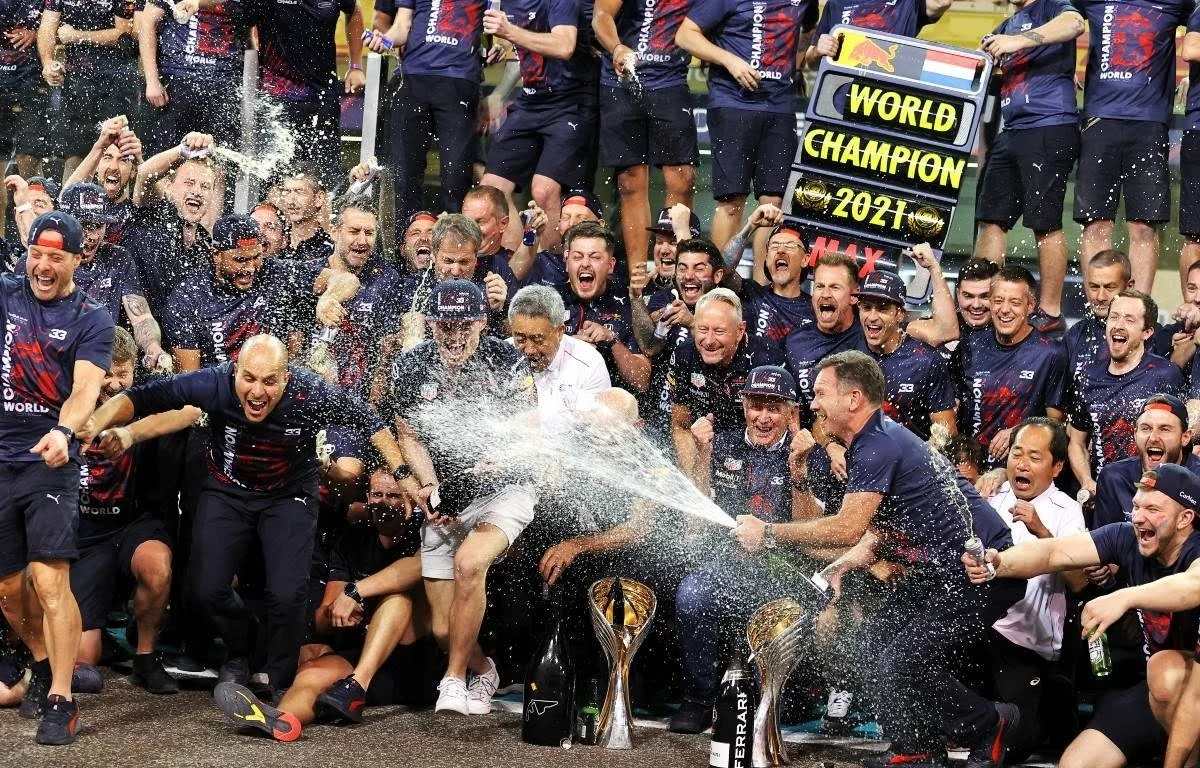
Image courtesy of PlanetF1.
A symphony of engine notes tears through the cold Arabian night. Commentator’s eyes widen as their hands move to their heads in utter disbelief. The crowd leaps to its feet, the roar of sixty-thousand amazed voices momentarily rivalling the scream of the cars. The No.33 Red Bull Racing car dives out alongside the black No.44 Mercedes, and time slows down. Is he going to do it? Surely, there’s no way to defend? How is this all even possible?
As I sat watching the Formula 1 Abu Dhabi Grand Prix, on Sunday the 12th of December, 2021, I was witnessing history. When Max Verstappen passed Lewis Hamilton on the final lap of the final race of the season to claim his first World Drivers Championship, there was a feeling in the air. The air above the Yas Marina circuit, and the air in my aghast living room. A collective understanding that what is happening before us will be remembered for a long, long time.
These are the moments that make sports so powerful, moments that are passed down through history, eventually becoming legend and inspiring new generations of devoted fans, and competitors. But who gets the final say on how these moments will be remembered? Sure, I may have watched the race live, but I only have my own individual memory and interpretation of events to go off of.
Sports don’t tell stories like other forms of media; it’s no secret that there is no one author behind these historic moments. Instead, it’s the collective interpretations of the fanbases, the media, and the athletes themselves who ultimately decide how these events will be portrayed, received and remembered.
Without knowing how these legendary stories grow and evolve through the osmosis of different perspectives, it is impossible to grasp and appreciate the true complexity that goes into the narratives that make professional sports so special.
Out of the three major authorial parties, athletes stand apart as the genesis of all sporting stories. It is their actions and careers that drive sports discourse, and their results that define sports history. As such, athletes hold a unique position in the cycle of sports narratives – they are directly responsible for how events will play out in the competitive arena, but they can’t control the ways in which their efforts will be received, both by their opposition as well as by the media and the fans.
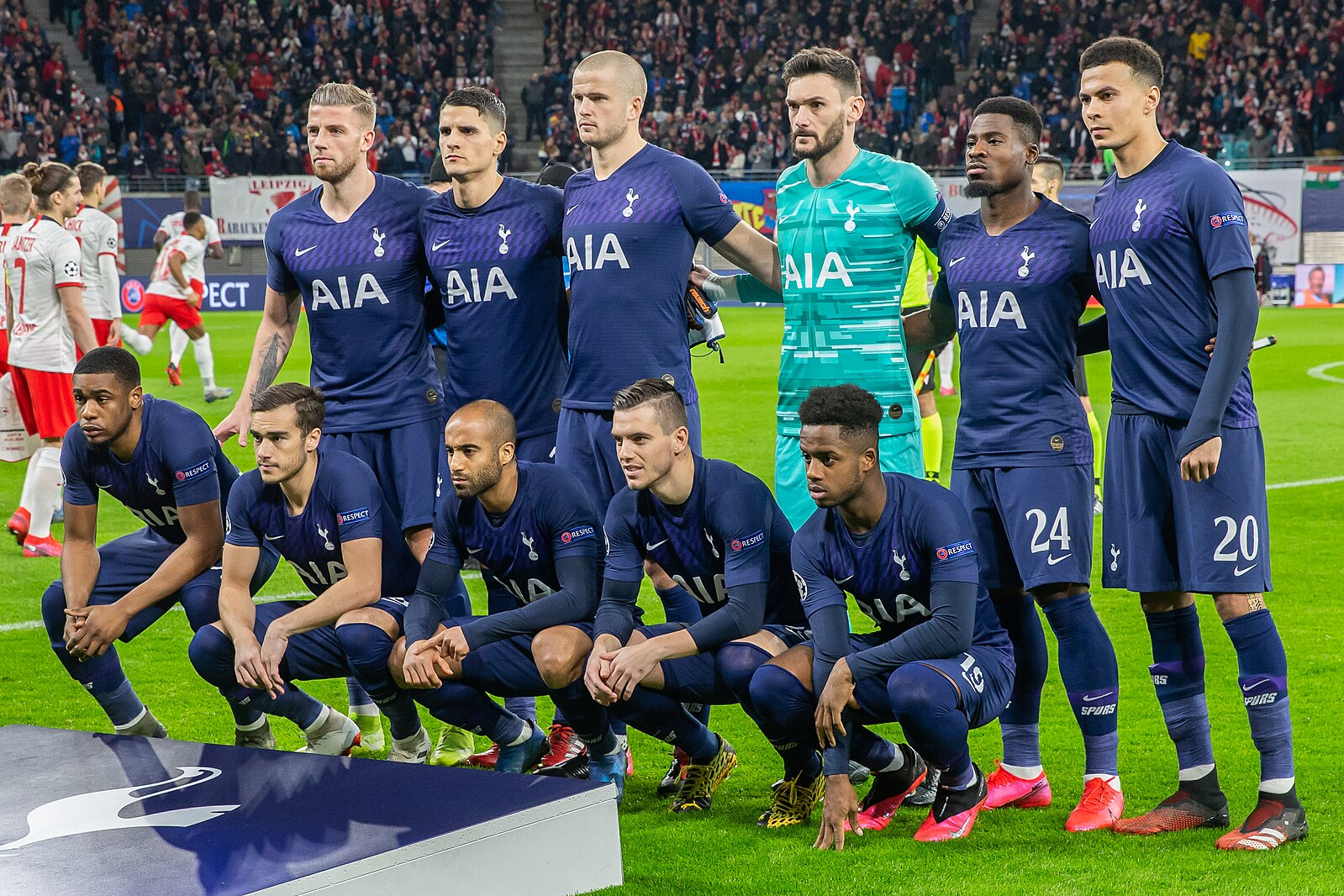
Tottenham Hotspur F.C. team photo at UEFA Champions League Final 2019. Image courtesy of Steffen Prößdorf / Wikimedia Commons.

Of course, athletes are more than just mechanical prodigies – they care about how they are portrayed by those telling their stories. Achieving success at the highest levels of competition requires an incredible amount of self-belief and unshakable determination, so it is understandable that athletes will want to utilise whatever methods that are available to them in order to have a say in how they are perceived publicly.
The widespread adoption of social media over the past fifteen years has given athletes the power to voice their thoughts and opinions without the traditional restrictions associated with media interviews or press conferences. This allows athletes to have a far greater influence over their own narratives than in decades prior, being able to speak out and interact with fans and critics directly and at any time in a relatively informal setting.
However, athlete’s social media pages have come under closer scrutiny from teams and managers in recent years following several high-profile instances of athletes making some very PR-unfriendly remarks in the early years of social media, including Swiss football player Michel Moragella and Greek triple-jumper Voula Papachristou who made racist posts on their personal social media pages, leading to their expulsion from the London 2012 Olympic Games.
Despite this, athlete’s social media pages still represent a significant departure from the dominance sports media used to hold over the industry in terms of defining narrative.
The social and cultural power that modern top-level athletes hold has proven to be immense. Marcus Rashford, for example, is known for utilising his platform as a successful football player to pursue philanthropic work. This includes collaborating with UK food bank charity FareShare since March of 2020, raising enough money to distribute 21 million meals for children and families in need in his time working alongside the organisation.
Rashford makes heavy use of his social media presence to promote this work, notably even making direct contact with UK prime minister Boris Johnson in 2020 to promote free school meals for children of low income households, such was the overwhelming public support for Rashford’s involvement in lobbying for the policy.
Rashford’s use of individual agency as a public figure proves that athletes are far from subservient to the media in the ways that they can utilise their social status, direct their own narratives, and define their own legacies outside of their professional careers. While Rashford’s work does not directly impact his role on the pitch, it does widen the public image of what an athlete can be in the eyes of the outside world.
This leads us to our second authorial party, one of the most polarising sectors in the industry, and arguably the most powerful narrative gatekeepers in sport: The Media.
The media sector has historically acted as a curator of sporting knowledge, responsible for taking what happens in the game and weaving together narrative throughlines for fans to follow along with at home. Because of this, the media naturally holds a lot of power in how stories will initially be framed, and the directions those stories might take.
As I’m sure you’re well aware, being able to keep up with what is happening in the sports world can be very time intensive, especially if you follow multiple disciplines closely.
The sheer number of events on modern sporting calendars makes easily digestible summary content vital for the majority of fans that only have limited amounts of time for recreation – outside of the most hardcore devotees, the media is to an extent the eyes and ears of the wider fanbase, a responsibility that is rarely comes without controversy.
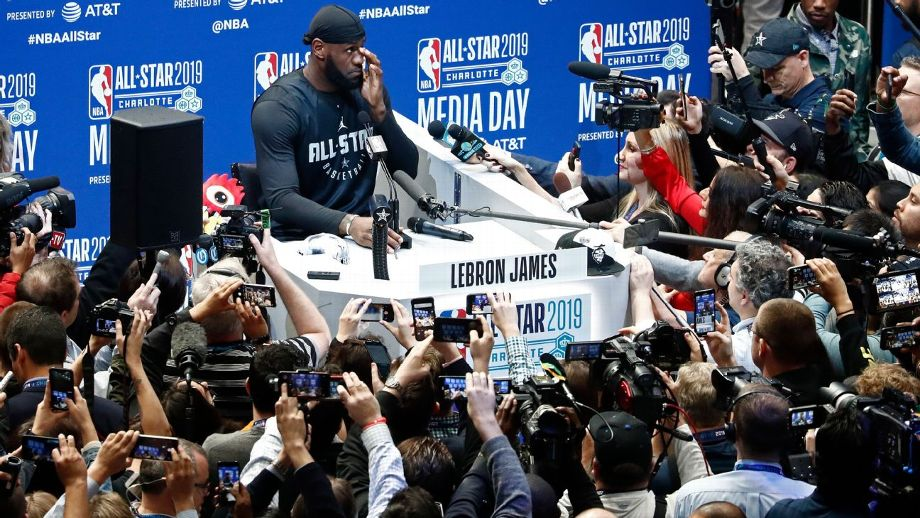
Lebron James taking questions from the media in 2019. Image courtesy of ESPN.
Since different media outlets hold certain biases in their reporting of events, factors like favouritism and nationalism can play a role in how the same information is delivered in different regions and to different audiences.
These biases can also shift based on the perceptions that an athlete holds at any one time. For example, when Italy reached the finals of the UEFA Euro Championship in 2012, black Italian player Mario Balotelli was lauded as the future of Italian football, but only two years later he would almost exclusively be portrayed as an outsider after a period of difficult results, both by left and right leaning Italian media outlets.
Balotelli would go on to fight this narrative on social media, famously posting ‘I'm Mario Balotelli, I'm 23 and I didn't choose to be Italian’ in 2014, an example of how athletes are now able to actively defend themselves in the public sphere, rather than relying on the media to broadcast their messages.
In my earlier example of Formula 1, the ‘British Bias’ debate has raged for years, with fans accusing both team personnel, and broadcasters like Sky Sports of intentionally painting British drivers in a more positive light than their international counterparts, even when their performances aren’t reflecting that positive light on track.
Disconnects between what the media is portraying and what the wider world is seeing bring us to our third, and final authorial party, the party that ultimately decides how events will go down in our collective memories: The Fans.
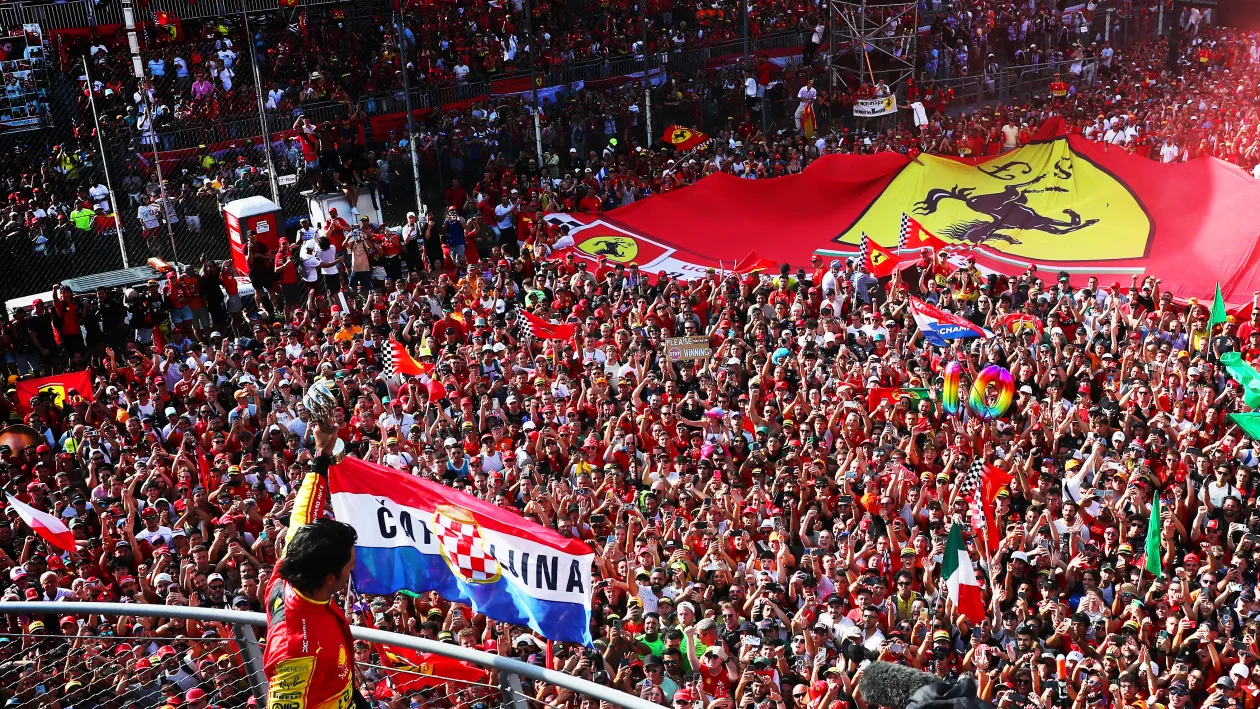
Carlos Sainz celebrates his podium finish in Monza at the 2023 Italian Grand Prix. Image courtesy of Dan Istitene / Getty Images.
While athletes and the media can frame narratives in whichever way they see fit, the fans are where the success or failure of any given narrative will be realised.
At the end of the day, professional sports are an entertainment industry that relies on fan interest and engagement to remain commercially viable. Without support from a dedicated fanbase, a sports league will struggle to maintain itself long-term – even with the initial support of major sponsors, as their main goal is to advertise to as wide of an audience as possible.
Social media has elevated the fans' capability to connect with one another and discuss the latest talking points, share opinions and participate in the culture surrounding their favourite sports. Being outside of the quote-unquote sports industry ‘bubble’, fans arguably have the most holistic picture of the sports scene out of our three major authorial parties, giving them substantial power in the ways they choose to make their voices heard.
On the flip side, tribalism and nationalism often goes unchecked within fandoms. While different media outlets may skew in certain directions while outwardly presenting their content as unbiased and factual, there is no such obligation for fans to take a similar approach when engaging in public discourse.
With the inherent volatility of social media, fuelled by conflict-oriented engagement and the confidence instilled by digital anonymity, it is perhaps little surprise that interactions between athletes and social media users are not always positive.
Simone Biles is a perfect example of how fan adoration can rapidly turn to resentment under the guise of ‘patriotism.’ Following her decision to withdraw from the 2021 Tokyo Olympic Games citing mental health concerns, Biles received a deluge of online abuse from so-called ‘patriots’ decrying her for ‘letting her country down.’
This approach was in stark contrast to the majority of media sources who overwhelmingly supported Biles’ decision to prioritise her health over her sporting obligations – an example of journalistic framing being required to counteract the noise associated with social media discourse.
This is not to say that fanbases are unable to harness their narrative power in positive ways – the overwhelming fan backlash the Dallas Mavericks NBA team faced upon trading away Slovenian basketball prodigy Luka Doncic earlier this year, a decision so bafflingly nonsensical that it bordered on sporting malpractice, resulted in the Mavericks freshly appointed general manager Nico Harrison being fired after just 9 months in the role.
While every sporting narrative is an amalgamation of these different perspectives, there are some which are so polarising or representative of endemic societal issues that they transcend the world of professional competition all together.
Whether you agree with his demonstrations or not, Colin Kaepernick defined the power modern athletes hold in society with his 2016 protests against racial inequality in the United States, kneeling during the American national anthem before his NFL games as quarterback of the San Francisco 49ers.
Kaepernick’s actions threw the US sports scene into a frenzy, with divisive discussions breaking out both in the media and amongst fans.
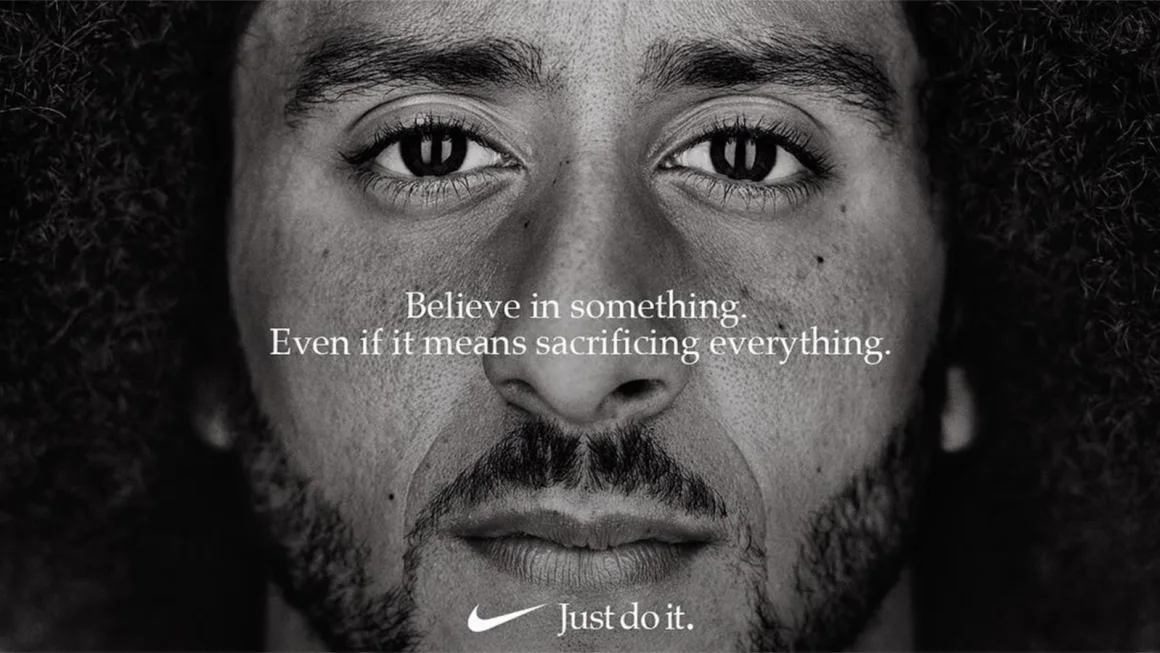
Nike’s 2018 ad campaign poster. Image courtesy of CNN.
Following Kaepernick’s face being used in a 2018 Nike Ad campaign promoting speaking out against injustices, some fans took to social media to demonstrate their ‘righteous’ indignation, destroying their own Nike products under hashtags like #JustBurnIt in protest of what they perceive to be growing anti-American sentiment.
While many fans and media personalities rallied in favour of Kaepernick’s right to peaceful protest, public opinion would continue to be divided for several years. It wouldn't be until the Black Lives Matter movement took off in 2020 that public perceptions began to shift on a large scale.
The NFL made a statement following the death of George Floyd, only to be inundated with fan comments, as well as star players calling out the league’s hypocrisy for its previous alleged actions to suppress Kaepernick’s further participation in the NFL after he opted out of his contract with the 49ers in March, 2017.
So, in answer to my original question, four years after Max Verstappen pulled off the upset of the decade, snatching victory from the seemingly insurmountable jaws of defeat, how have different narrative perspectives shaped the way this result has been remembered?
Verstappen would enter an era of domination, winning four titles in a row in commanding fashion. Fan and media opinions were divided in the months following the 2021 season with scattered blame being attributed across the board – from race director Michael Masi’s controversial decision to allow only some lapped cars to overtake under the safety car before restarting the race with Verstappen right behind Hamilton on fresh tyres, to Nicholas Latifi for crashing during his fight with Mick Schumacher at the tail end of the field to bring out the safety car in the first place.
The events of the final race are now broadly regarded as a passing of the torch from the experienced old guard to the opportunistic and hungry new generation of racers, and the moment that cemented Verstappen’s resilience and determination in the face of near-certain defeat.
Formula 1 may be about to enter a new era as Max Verstappen goes up against Lando Norris this weekend, once again from an underdog position under the lights in Abu Dhabi in what may turn out to be his first unsuccessful title defense since that magical evening four years ago…