
Feeling is Believing
Does Technology Enable or Hold Back Narratives in Videogames?
Written by Seb Ingham
November 2025
Header images courtesy of Playstation / Sony.
From the humble 8-bit sprites of Super Mario Bros.to the individually discernible skin pores on the character’s faces in Horizon: Forbidden West, it's safe to say that modern videogame graphics are unrecognisable from their blocky, 2D ancestors. The advancements made in graphical processing over the last 40 years grants contemporary artists and game designers the power to create almost any scene they can imagine in breathtaking detail and clarity, all while running at buttery smooth framerates on modern hardware.
Immersion is often touted as a cornerstone of successful game design; being able to transport an audience into a story – literally, in the case of videogames – is one of the most effective methods of creating narrative resonance. Advancements in graphical fidelity have naturally gone hand-in-hand with this discussion, with major videogame events, such as the now-defunct Electronic Entertainment Expo, and Gamescom resembling somewhat of an ‘immersion arms race’ in recent years as triple-A publishers compete to create the most visually enthralling virtual worlds on the market.
But as impressive as modern graphics are, and as visually captivating as new releases can be, they beg the question: is it all really necessary? Can compelling visuals truly affect the quality of a story? Are cutting-edge graphics merely a gimmick indicative of an industry growing evermore obsessed with flashy marketing? Or are these modern games really harnessing their awe-inspiring visuals to amplify their narrative impact? With the amount of options storytellers have for conveying their narratives across the contemporary media space, picking the most effective medium has become a more complex decision than ever before. Now that videogames can compete with cinema in terms of visual fidelity, and with the potential for personal interactive engagement in future narratives, are videogames becoming the most obvious choice for emerging storytellers?
To find out, we need to go back to when fancy graphics were simply not an option, and game designers needed to rely on other methods of immersing their players.
Doing a Lot with a Little
In the early days of home computing, videogames were able to rely on their sheer novelty to attract and immerse players. While the interactive elements of videogames are a given nowadays, the effects of real-time control when it first broke onto the media scene were nothing short of jawdropping.
While the first home gaming consoles were undoubtedly revolutionary, it would not be until the 16-bit era of the late 80s and early 90s that videogame graphics could begin to transcend their 8-bit blockiness. The arrival of new, more powerful consoles like the MegaDrive and Super Nintendo Entertainment System (SNES) brought about more stylized worlds and colourful characters as designers made full use of the extra processing power of the new generation of consoles. Fast forwarding to the late 90s and the emergence of true 3D accelerated graphics, we saw yet more innovation in the ways designers could create compelling experiences that were now unburdened by a flat dimensional plane.
The rise of 3D graphics specifically was a turning point for gaming narratives. In prior generations, the main emphasis was on the pure fundamentals of the gameplay, but with historically restrictive barriers in computing power now a thing of the past, developers could begin to make narratives a real focal point of the player experience. Games like Half-Life, Final Fantasy XII and Metal Gear Solid, along with more experimental titles such as Grim Fandango, were proving that videogames could portray complex and compelling stories, utilising their new-found 3D graphics to visualise their narratives in a more cinematic setting that helped them shake the stigma of being merely kids playthings.
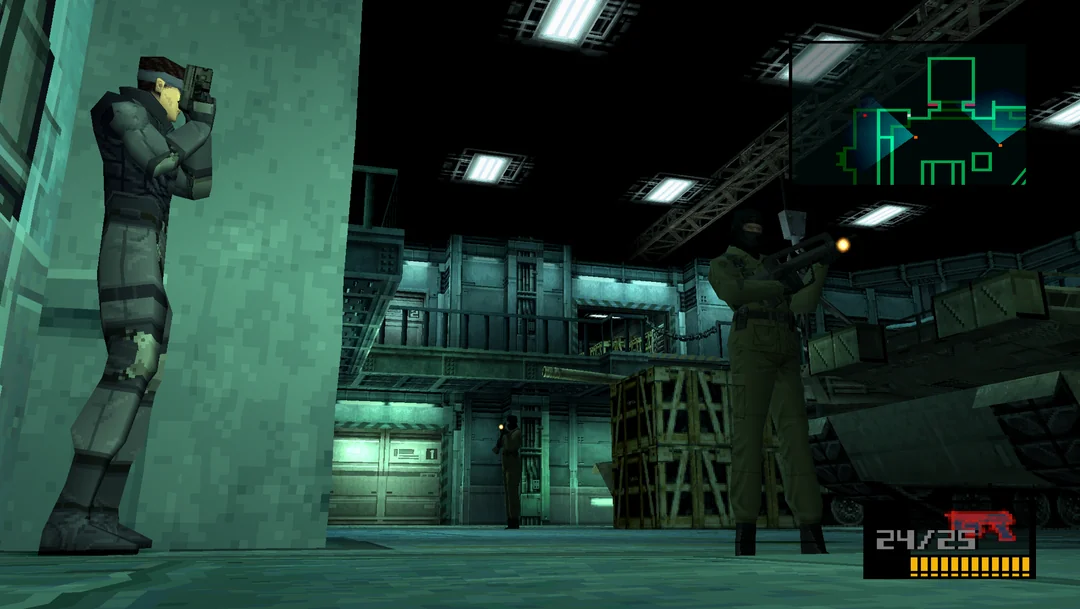
Metal Gear Solid, 1998, Image courtesy of user philx_x on Reddit.
This trend would only continue into the 2000s and 2010s, with seminal titles like Mass Effect, The Last of Us and Detroit: Become Human standing tall as examples of the narrative power of videogames. These games all present themselves as cinematic experiences, utilising advanced ‘photo-realistic’ style graphics to underline their serious narrative tone.
As technology continued to rapidly improve, this highly realistic visual style began to become more and more prevalent as the push for immersion began to be replaced with a corporate push for ever-increasing realism.
The Power of Now
The last decade of triple-A game development has only continued to push the technical envelope. Computers and consoles are orders of magnitude more powerful than they were just 10 years ago, and the advent of new input methods like virtual reality headsets have pioneered entirely new ways for players to physically interact with their favourite virtual worlds.

Valve Index VR Headset and controllers, 2019, Image courtesy of Valve.
We are at a point now where it is difficult to imagine photo-realism in videogames getting much better. Titles like Red Dead Redemption 2 feel as though they push up against the limits of what is possible in terms of graphical detail – potentially even to the game’s detriment in some areas. Watching the game's protagonist, Arthur Morgan, painstakingly search through each and every cupboard, draw, chest and trunk in real-time eventually becomes a little tiresome, no matter how impressively fluid and realistic his animations are.
On the other hand, it could easily be argued that being forced to watch Arthur complete even the simplest of tasks in slow, excruciating detail fits with the overarching narrative themes of the gameworld; the old west is dying and life is hard for those who choose to live outside of modern society, clinging on to an idealist vision of the American frontier as the rest of civilisation leaves them behind.
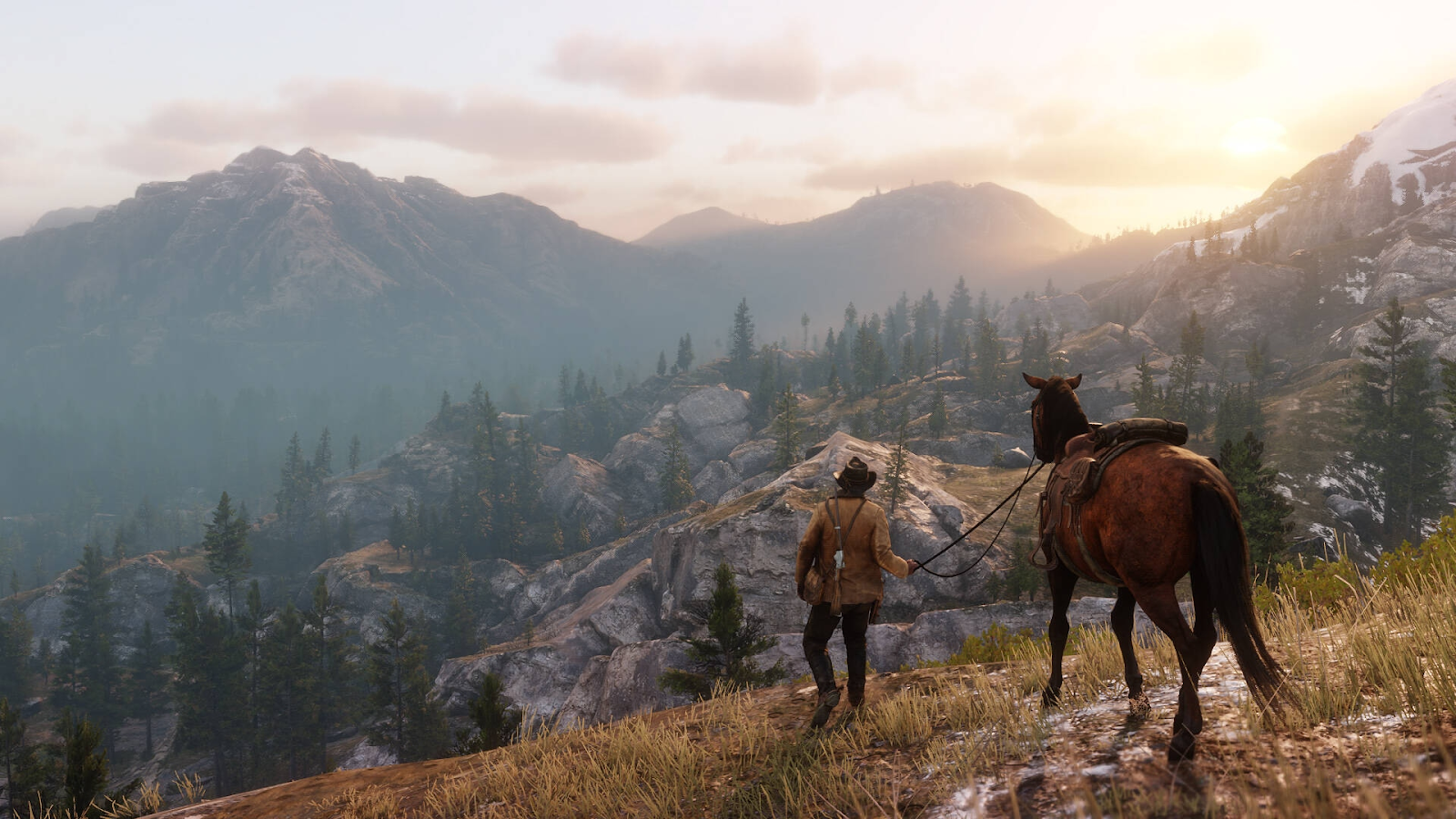
Red Dead Redemption 2, 2018, Image courtesy of Rockstar Games.
While Red Dead Redemption 2 was ultimately a resounding success in both its narrative and gameplay, there are plenty of examples of major game releases which do not utilise the narrative power of their visuals, with some even suffering as a result of how good they look.
The aforementioned Horizon: Forbidden West is a prime example of this. Despite being one of the most technologically impressive videogames ever made, it has little in the way of gameplay innovations or narrative complexity. As writer for Kotaku Levi Winslow puts it:
‘That sameness is the biggest criticism for Forbidden West. Despite receiving glowing praise from most games press, between this and reviews of high-profile games like Far Cry 6, you can glean that reviewers may be growing tired of standard-fare renditions of the open-world formula. The game sounds like a visual spectacle that leans heavily on a well-trodden path.’
Horizon: Forbidden West is an excellent example of how the effects of visually presenting a game in a certain way can be detrimental to its other core aspects in terms of player expectation. The game may be breathtaking to behold and strike a chord with players when they first boot it up. But as they continue playing, the graphical shine will inevitably wear off and the player will be left underwhelmed, their initial awe replaced with disappointment at the mile wide, inch-deep experience they are now left with.
Player or Viewer?
Being able to make the connection between the player’s seen and felt experience and the overarching narrative is possibly the most fundamental challenge of creating a successful story in a videogame. Because the player is interacting with the experience in several different ways, each method of communication must converge and achieve ludonarrative harmony in order to build a cohesive story.

Disco Elysium, 2019, Image courtesy of ZA/UM.
Disco Elysium, released in 2019, is a perfect example of this harmonic relationship in action. The game portrays the player character as an amnestic, alcoholic police officer who is struggling to piece together the world around him from scratch – and solve the biggest case of his career in the process. This narrative is reflected in the game’s visuals. The gameworld is digitally painted, with 3D character models superimposed over the top. This art style allows for a lot of expressiveness, both in the painting itself as well as the characters' animations (although they are kept minimal).
In Disco Elysium, we see how visual style and aesthetics can actively play a role in a game’s narrative, rather than being designed merely to look pretty while the story is delivered in the foreground.
This is not to say that there isn’t merit in a game having appealing graphics – videogames are one of the most time intensive mediums for storytelling there is, with players expected to potentially commit tens of active hours to each individual experience. An interesting, immersive or impressive visual style is more likely to entice and retain players, potentially taking some of the weight off of the narrative to do the heavy lifting early on.
Titles like Outer Wilds and Lethal Company are notable examples of games that successfully emphasize their unique styles to aid narrative immersion. The desolate and lonely solar system of Lethal Company is established before the player even lands on their first moon by the dimly lit, heavily shaded and quantized colours of the interior of their ship. Since the game features a more indirect, less structured story, achieving a compelling atmosphere for the player to explore and find clues within is vital to building the game’s excellent cohesion.
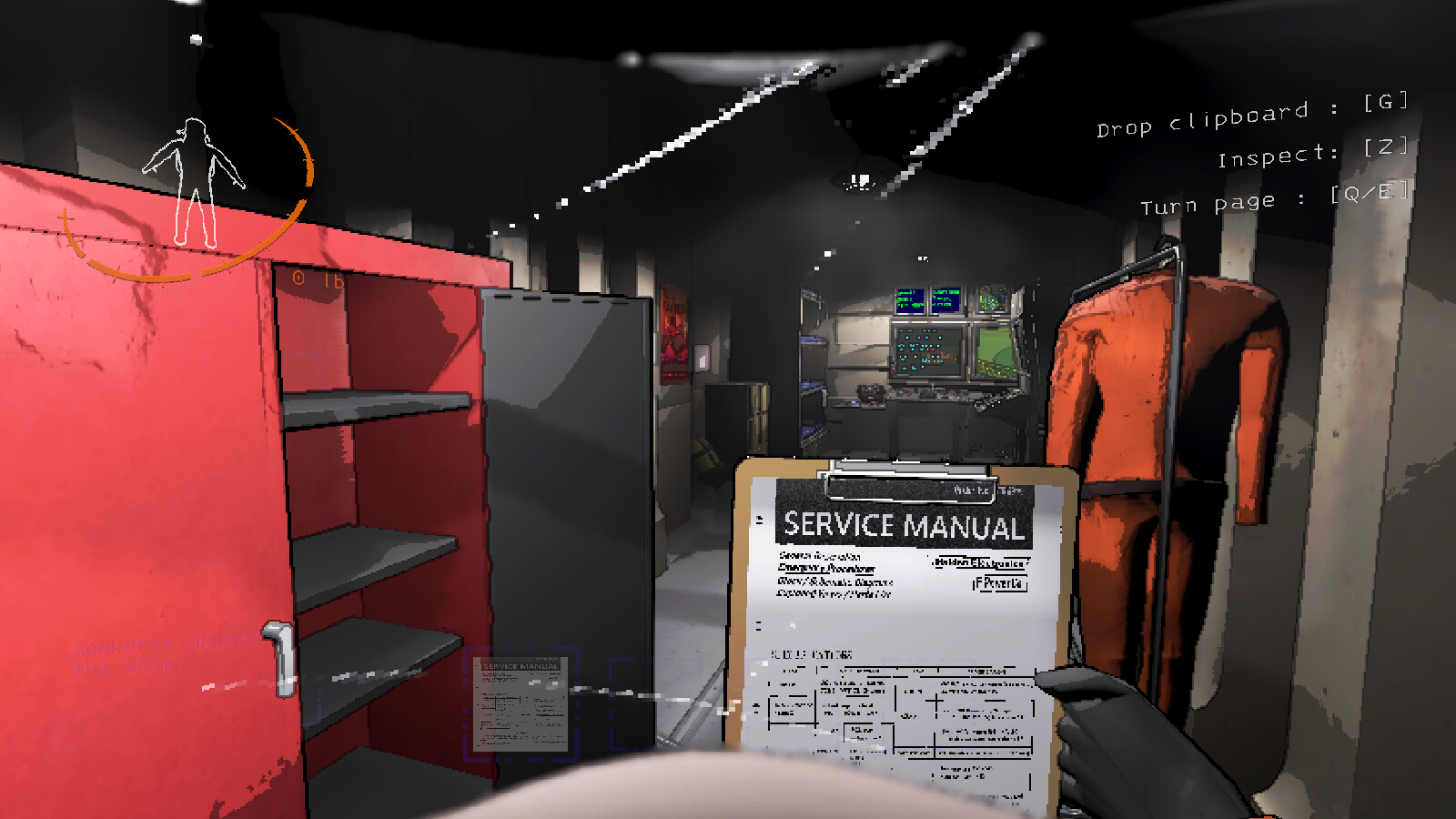
Lethal Company, 2024, Image courtesy of Zeekerss.
In contrast, the cozy yet mysterious visuals of Outer Wilds invite players to take their first steps among the stars in what will surely be a beautiful, personal – albeit existential – journey. These visuals lull the player into a false sense of security, so when the serenity is ripped away at pivotal moments in the game to reveal the terrifying realities of the universe, the tonal shift is incredibly impactful.
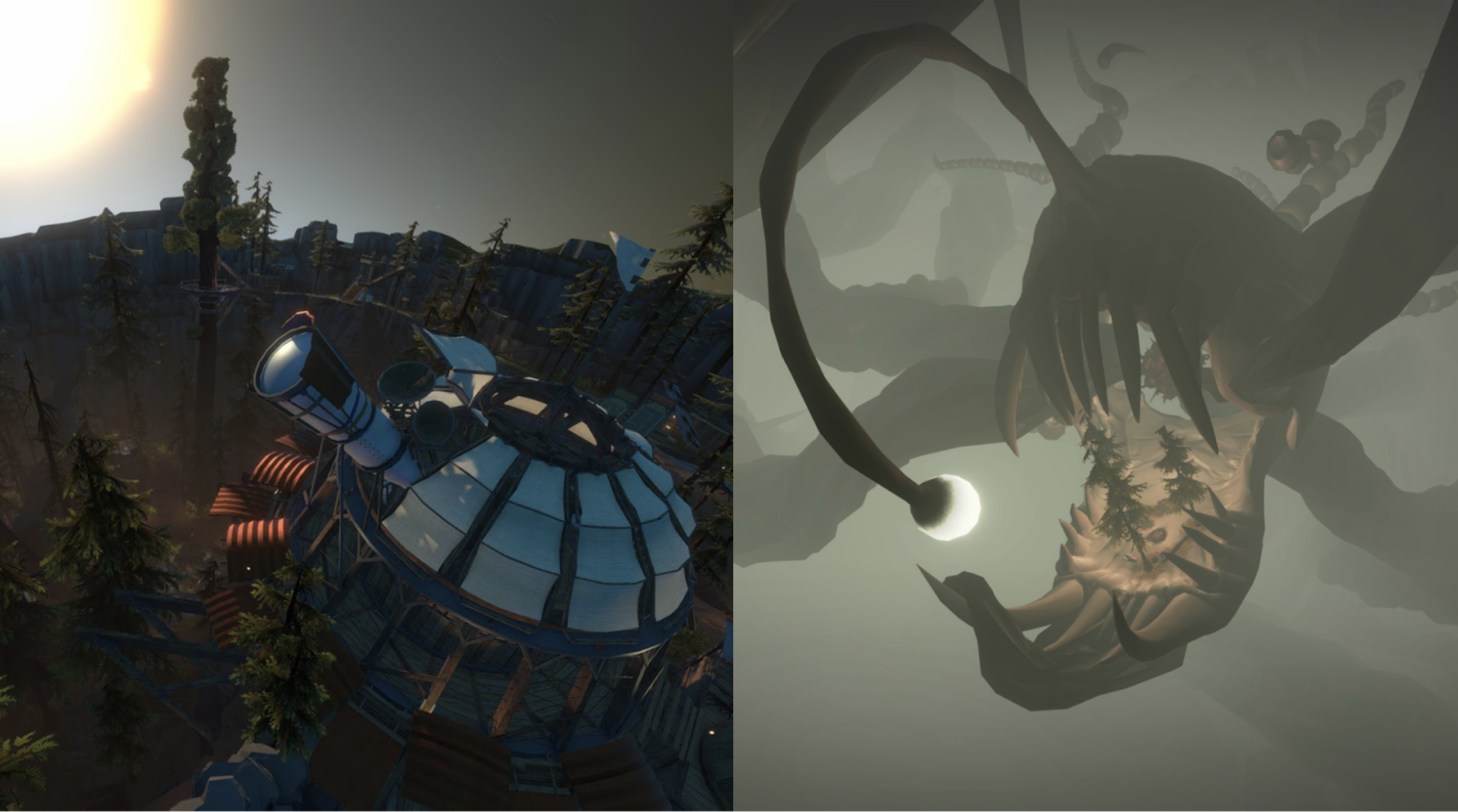
Outer Wilds, 2019, Images courtesy of Mobius Digital.
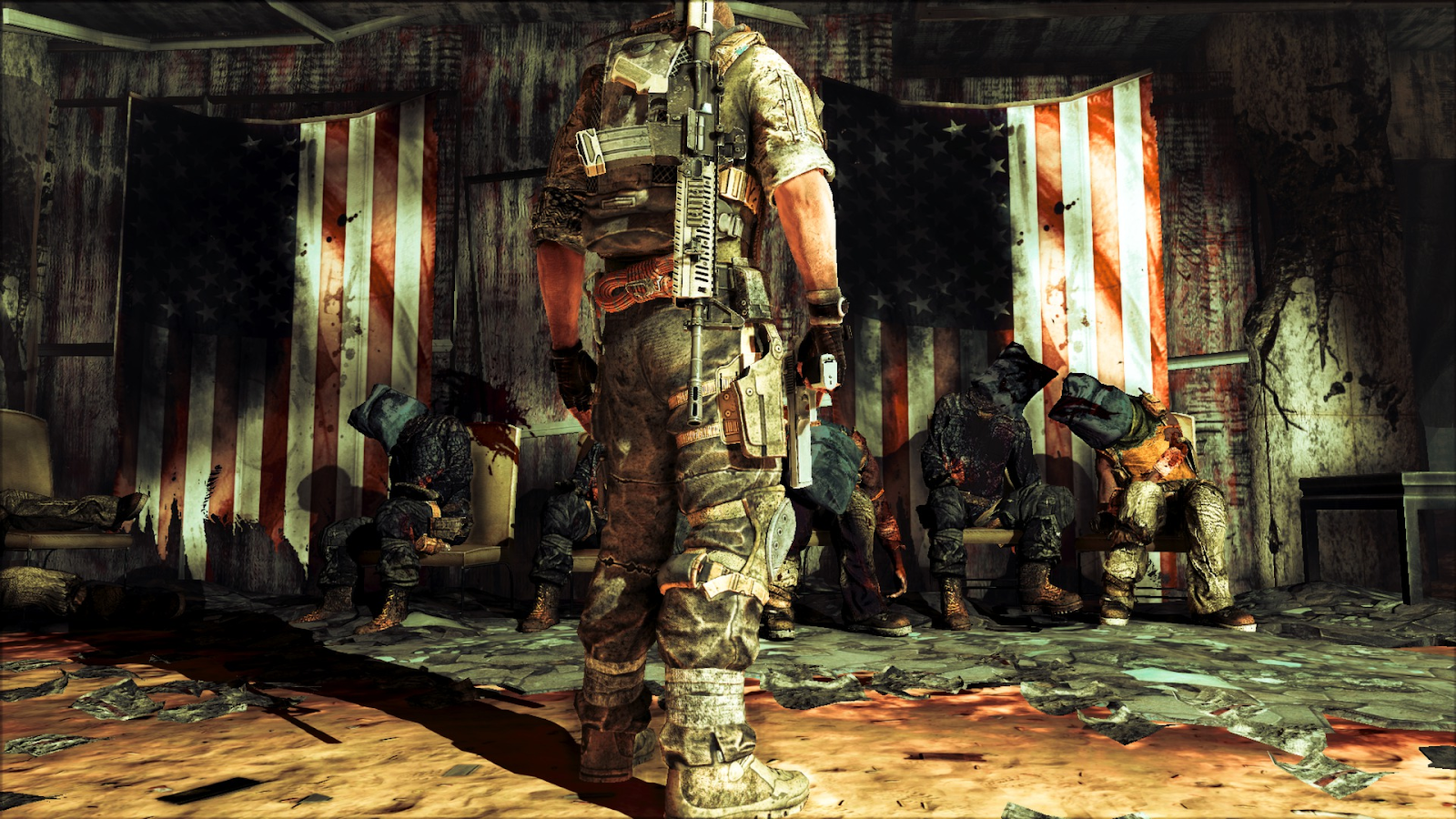
There are also games that take the playerbase’s preconceived ideas about a genre and turn them on their head for narrative emphasis. In Spec Ops: The Line, released in 2012, this subversion is created by utilising a gritty, modern-military shooter aesthetic, a style that had been widely criticised at the time for its perceived unoriginality and lack of creative vision.
This style creates certain expectations within players, which the game – for the most part – adheres to for the first thirty minutes or so of gameplay, before beginning to incorporate narrative themes around morality, military violence and decision making when lives are at stake.
While not completely absent from mainstream titles with the same aesthetic, such as Call of Duty and Battlefield, these themes are front and center in Spec Ops, deliberately halting the action and forcing the player to make soul-rending moral choices, forcing them to question if what they are doing is truly justifiable.
Spec Ops: The Line, 2012, Image courtesy of 2K & Missing Link Games.
Artistic Expression & Corporate Marketability
Ultimately, a game’s visuals will never fully dictate its narrative direction or success, however they certainly can have an effect on the way the overall experience is perceived.
The effects of triple-A publishers pushing for a photo-realistic style over the last decade has given the clean and polished look somewhat corporate and uninspired connotations. Couple that with the fact that these graphics are monumentally expensive to create, and consistent, high-profile flops from big-budget companies and it is little wonder why gamers are starting to take ‘realistic’ graphics with an ever-growing pinch of salt.
Stacey Henley, Editor-in-Chief at TheGamer, put it best in 2024:
These days, games are perfect. Maybe not to play and maybe not for everyone (no game ever really could be), but in terms of looking like exactly what they want to look like, they nail it. And as a result, they're boring. They want to look like real life, and they do, and once you get over being impressed by the realistic eyelashes, there's not a lot to say. They don't feel deliberate, despite having the power to be.
Although mainstream game presentation may continue to stagnate, there are clear and consistent examples of visual innovation in smaller ‘double-A’ releases, as well as the ever-creative indie game scene. It is yet to be seen whether the mainstream gaming industry will break free from this trend following the success of their more humbly financed contemporaries, or whether triple-A gaming will continue to pursue cinematic realism and wider media expansion, as seen with the rise of videogame-based TV shows like Fallout and The Last of Us. What is for sure though is that graphics determine a lot about a game’s perception and longevity, whether triple-A marketing teams want them to or not.